The future of sportsbook gamification will not be defined by who adds the most badges, wheels, or promotional widgets. It will be defined by how intelligently sportsbooks respond to player behavior in real time.
For years, gamification in sports betting meant adding isolated mechanics around the wagering experience:
- Leaderboards
- Points
- Achievements
- Challenges
- Free bets
- Badges
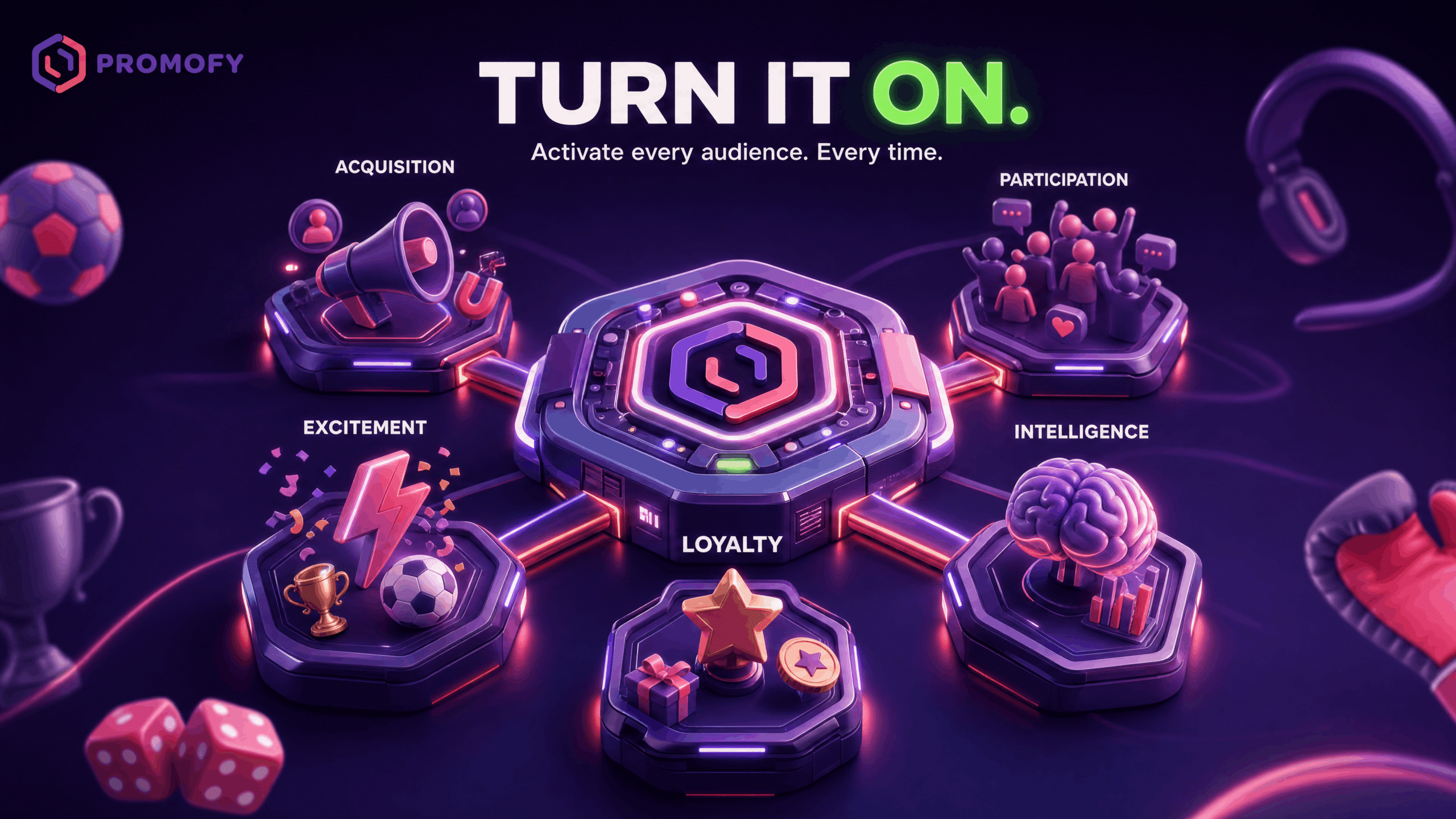
Those mechanics still matter. But the architecture around them is changing. The next generation of sportsbook engagement will connect these elements into one continuous system:
Player Events ➔ Segmentation ➔ AI and Decision Logic ➔ Missions and Progression ➔ Free-to-Play Experiences ➔ Rewards and Loyalty ➔ Responsible-Gaming Controls ➔ Measurement
That is a much larger shift than simply making sportsbooks look more like video games. It changes gamification from a campaign tactic into engagement infrastructure.
Here are seven trends likely to shape sportsbook gamification through 2028.
1. Gamification Will Move From Scheduled Campaigns to Real-Time Events
Traditional sportsbook marketing often works in batches: A segment is created, a campaign is scheduled, an offer is sent, and the player acts sometime later. Modern gamification can operate much closer to the player event.
The Modern Real-Time Flow:
- Player completes qualifying action
- Event reaches engagement engine
- Eligibility is checked
- Mission progress updates
- Reward or next objective appears immediately
The difference is responsiveness. If a player completes an objective now, the experience should ideally recognize that action while the context is still relevant. That matters particularly in sportsbook environments where events move quickly. A football match, tennis set, or live sports moment has a limited engagement window.
The future therefore belongs increasingly to event-driven gamification, where player actions trigger immediate changes in the experience. (Note: Promofy’s current architecture already reflects this direction through real-time player activity and API-first integration with operator systems.)
Why This Matters
Real-time architecture enables:
- Instant mission progression
- Live leaderboard updates
- Contextual rewards
- Event-based challenges
- Immediate eligibility changes
- More responsive player journeys
The strategic difference is simple: Scheduled marketing asks what segment the player belonged to yesterday. Event-driven engagement asks what the player just did.
2. AI Will Shift From Content Generation to Engagement Decisioning
AI is already becoming one of the most heavily used terms in iGaming. But the most important long-term application will probably not be generating promotional copy. It will be deciding: What experience should happen next?
A future sportsbook engagement system could evaluate signals such as:
- Sports preference
- Historical campaign participation
- Mission completion
- Reward usage
- Session frequency
- F2P behavior
- Loyalty progression
- Previous campaign response
It will use those signals to determine the next relevant engagement opportunity.
Example Scenario:
Player regularly participates in football predictions ➔ AI recognizes football affinity ➔ Relevant Champions League challenge becomes available ➔ Player completes challenge ➔ System adjusts next mission based on behavior.
This moves personalization beyond changing a headline or offer. The journey itself becomes adaptive.
AI Should Optimize Relevance, Not Pressure
This distinction becomes increasingly important in regulated environments. The goal should not be to make the player interact as often as possible. The better objective is to deliver the most relevant eligible experience at the appropriate time.
The same intelligence that identifies engagement opportunities should also respect:
- Responsible-gaming status
- Marketing permissions
- Exclusions
- Jurisdictional rules
- Campaign limits
The future of AI-driven gamification will depend as much on decision governance as on personalization.
3. Free-to-Play Will Become Part of the Core Sportsbook Funnel
Free-to-Play (F2P) has historically been treated as a promotional side campaign. That is changing. Prediction games, quizzes, Pick’em formats, and jackpot predictors can support multiple stages of the customer journey:
Acquisition ➔ Registration ➔ Activation ➔ Repeat Engagement ➔ Sportsbook Participation
This makes F2P particularly valuable around major sports events. A fan may not initially want to register, deposit, and bet. But they may be happy to predict tonight’s score. That lower-friction interaction gives sportsbooks another entry point into the relationship. (Promofy currently positions its Sports F2P Suite specifically around acquisition, activation, and retention, with multiple sports and live sports-data updates.)
F2P and Gamification Will Increasingly Merge
The future journey may look like this:
Pick’em ➔ Leaderboard ➔ XP ➔ Mission ➔ Loyalty Progression ➔ Sportsbook Campaign
At that point, Free-to-Play is not a separate tool. It becomes the top of the gamification journey.
4. Loyalty Will Shift From Static VIP Tiers to Dynamic Progression
Many sportsbook loyalty programs still operate around relatively static categories (e.g., Bronze ➔ Silver ➔ Gold) based largely on value or activity thresholds.
Future loyalty systems will likely become more dynamic. Instead of one-dimensional tier movement, players may progress through combinations of:
- XP (Experience Points)
- Missions
- Campaign milestones
- Achievements
- Sports-specific journeys
- Loyalty maps
- Virtual currency
- Segmented challenges
That turns loyalty into something the player can actively see and understand.
Visible Progression Creates Continuity
Consider the difference between a static message (“You are a Gold customer“) and a dynamic one (“Gold Level 780 XP / 1,000 XP toward Platinum“). The second version gives the player a visible state and next objective. This connects one session to the next.
Future loyalty will become less like a hidden CRM segment and more like a visible player journey.
5. Rewards Will Become More Flexible and More Economically Measured
Sportsbook engagement has traditionally relied heavily on monetary incentives like free bets, deposit bonuses, odds boosts, and cashback. Those formats will remain important, but future gamification systems will increasingly combine monetary and non-monetary rewards:
- XP and Status
- Achievements
- Virtual currency
- Campaign access
- Mystery rewards
- Merchandise and partner benefits
- Exclusive experiences
From Bonus Spend to Engagement Efficiency
The important shift is not simply reward variety; it is reward economics. Operators need to understand how much a reward costs, what behavior it changes, which segments respond, and whether a cheaper mechanic could achieve the same outcome.
Instead of asking, “How much bonus did we distribute?”, future engagement teams should ask, “What incremental player behavior did each unit of promotional cost create?”
This leads to new metrics:
- Reward cost per active day
- Reward cost per retained player
- Cost per mission completion
- F2P cost per activated player
- Incremental revenue per campaign participant
6. Gamification Will Become More Connected Across the Player Journey
One of the biggest limitations of early sportsbook gamification was fragmentation. An operator might have one leaderboard, one loyalty tool, one prediction game, and one bonus platform but each behaved independently.
The future is connected. Imagine this loop:
- User enters World Cup prediction game
- Registers and earns points
- Joins leaderboard
- Completes weekly challenge and receives XP
- Unlocks next loyalty level
- Receives eligible reward
- Moves into next sports campaign
Every action updates the player state. Campaigns no longer need to be isolated; one experience can determine what happens next. This is the defining difference between basic gamification tools and genuine engagement infrastructure.
7. Responsible Gamification Will Become a Product Requirement
The biggest change in sportsbook gamification may ultimately be regulatory rather than creative. As personalization and real-time engagement become more powerful, operators need stronger control over when engagement should stop.
A future gamification platform must be capable of understanding:
- Player eligibility and self-exclusion
- Responsible-gaming status
- Jurisdiction and marketing consent
- Promotional restrictions and reward limits
Real-Time Engagement Should Enable Real-Time Restraint
Older gamification asked: “What can we trigger?” Future gamification needs to ask: “Should we trigger it for this player right now?”
That makes responsible gaming part of the engagement architecture rather than an afterthought. The future stack needs activation logic and restriction logic operating together in perfect sync.
What Will Become Less Important?
Not every current gamification trend will survive on its own. The following are likely to become less strategically important:
- Badges without utility: An achievement nobody values adds little.
- Generic wheels: A reward wheel displayed to everyone without context quickly becomes just another promotional surface.
- One-size-fits-all missions: The future favors segment- and event-specific challenges.
- Isolated leaderboards: Leaderboards will be linked to progression, F2P, and loyalty.
- Throwing more bonuses at players: Increasing promotional volume does not equal a sophisticated strategy.
The future is less about adding mechanics and more about connecting them intelligently.
What the Sportsbook Engagement Stack May Look Like by 2028
A simplified future sportsbook architecture could look like this:
Sportsbook / PAM
⬇
Real-Time Player Events
⬇
CRM / CDP / Player Profile
⬇
AI Decision Layer
⬇
Gamification Engine (F2P / Missions / Loyalty / Leaderboards)
⬇
Reward Engine
⬇
Player Experience & Analytics
(With Responsible-gaming rules sitting across the entire system)
This API-first, modular model allows operators to keep their existing CRM and platform infrastructure while adding a specialized engagement layer around it.
How Sportsbook Teams Should Prepare Now
Operators do not need to wait until 2028. There are five practical steps teams can take now:
- Move beyond one-off promotions: Start designing sequences rather than isolated campaigns.
- Connect player events: Ensure engagement systems receive meaningful real-time activity from the sportsbook or PAM.
- Define progression: Give players persistent goals through missions, XP, levels, or loyalty journeys.
- Measure incremental behavior: Track whether campaigns change active days, retention, activation, and campaign cost.
- Build compliance into campaign logic: Eligibility and suppression should be part of campaign architecture from day one.
The Future Is an Engagement Layer, Not Another CRM
Where does gamification belong in the technology stack?
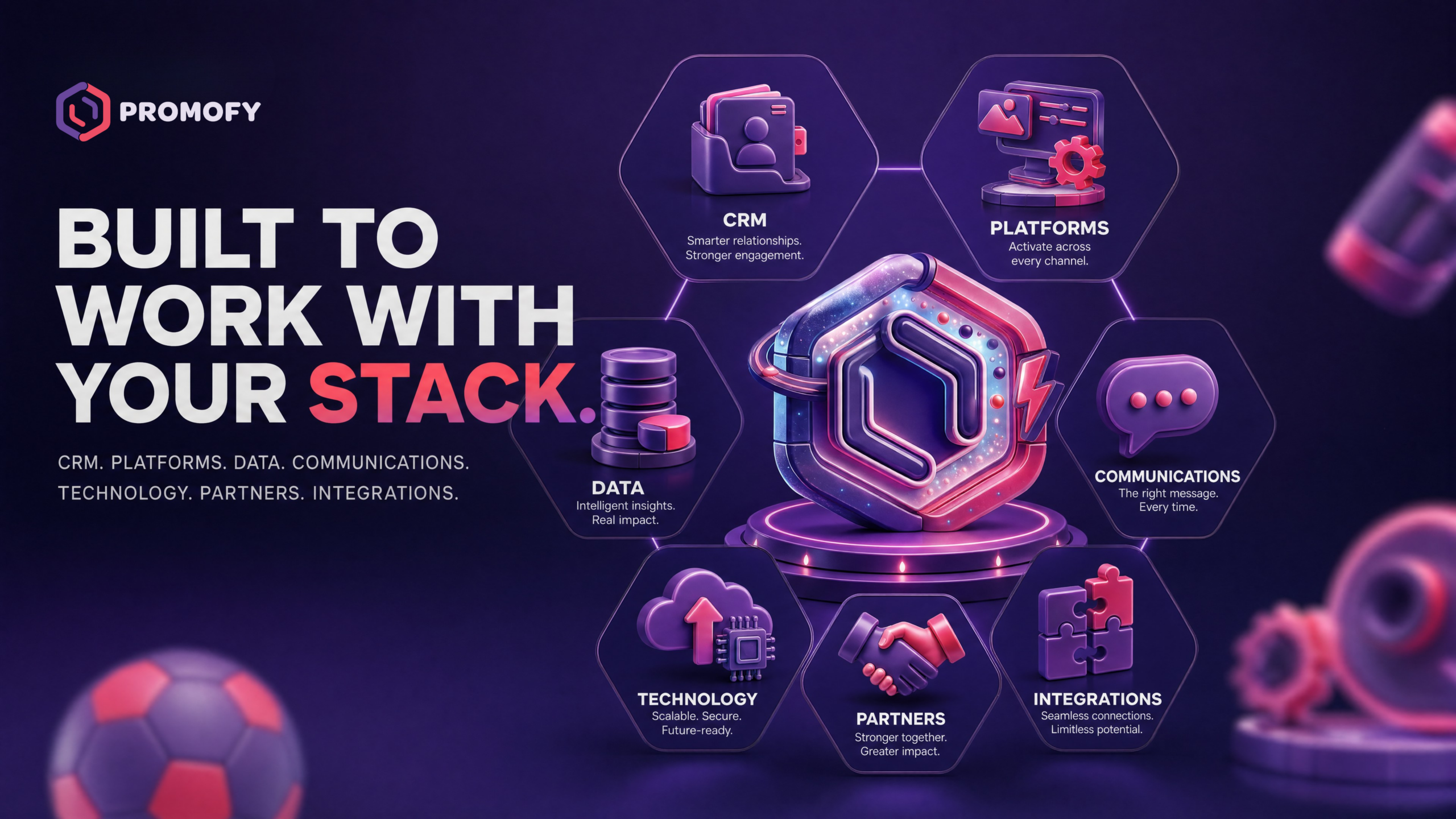
- CRM systems handle segmentation, communication, and customer data.
- The Sportsbook handles markets, odds, and wagering.
- The Gamification Layer translates player activity into progression, competition, challenges, and interactive experiences.
The future does not require operators to replace their CRM or core platform. It requires a specialized layer that makes those systems visible and interactive to the player.
How Promofy Fits Into the Future of Sportsbook Gamification
Promofy is built as an AI-driven, API-first gamification and loyalty layer designed specifically for real-money gaming. Its ecosystem connects:
- Progression: Missions, XP, levels, ranks.
- Competition: Challenges, live triggers, leaderboards.
- Loyalty: Journeys, virtual currency, cashback, milestone rewards.
- Free-to-Play: Prediction games, quizzes, jackpot mechanics.
- Infrastructure: Real-time player activity, configurable rewards, budget controls, AI analytics.
Rather than requiring a total system overhaul, Promofy connects to existing infrastructure, turning player events into engagement experiences. It perfectly reflects where sportsbook gamification is heading: from isolated mechanics to connected engagement systems.
Future of Sportsbook Gamification FAQ
What is the future of sportsbook gamification?
Sportsbook gamification is moving toward real-time, event-driven engagement where missions, loyalty, F2P, leaderboards, rewards, and AI personalization work together rather than operating as isolated features.
How will AI affect sportsbook gamification?
AI can help determine which eligible campaign, challenge, or experience should be presented based on player behavior and context. Its future role will focus increasingly on engagement decisioning rather than just content generation.
Will Free-to-Play become more important for sportsbooks?
Yes. F2P experiences such as Pick’em games, predictors, and quizzes can support acquisition, activation, and retention before and after real-money sportsbook activity.
Will bonuses disappear?
No. Monetary rewards will remain important, but operators are likely to combine them with progression, virtual currencies, status, achievements, and non-monetary incentives to create sustainable engagement.
What is real-time sportsbook gamification?
Real-time gamification uses player or sports events to immediately update missions, progression, leaderboards, or rewards instead of relying solely on scheduled batch campaigns.
How does responsible gambling fit into gamification?
Responsible-gaming status, eligibility, exclusions, and promotional restrictions should be incorporated directly into campaign and triggering logic so engagement can be suppressed when appropriate.
Does sportsbook gamification require replacing the CRM?
Not necessarily. A specialized gamification layer can connect with an existing CRM, PAM, and sportsbook infrastructure through APIs and player-event integrations.
The Next Era of Sportsbook Engagement
The first generation of sportsbook gamification asked: “What game mechanic should we add?” The next generation asks: “What should happen after this player event?”
That is a fundamentally different question. It shifts the conversation from features to systems.
- From leaderboards to connected competition.
- From bonuses to reward economics.
- From VIP tiers to visible progression.
- From generic campaigns to real-time journeys.
- From more engagement to relevant, measurable, and responsibly controlled engagement.
The future of sportsbook gamification will not belong to the platform with the most widgets. It will belong to the systems capable of turning every eligible player event into the right next experience.