Getting visitors to an online casino or sportsbook is expensive.
Operators invest in affiliate partnerships, paid advertising, SEO, sponsorships, and performance campaigns to attract potential players. Yet a significant part of that traffic can disappear before a visitor completes registration.
The problem is not always the quality of the acquisition channel.
Sometimes, visitors simply have no compelling reason to interact with the website beyond browsing.
They arrive, explore a few pages, review the available promotions, and leave.
Traditional landing pages often rely on promotional banners, welcome offers, and registration buttons to encourage the next action. But adding more incentives or increasing bonus budgets does not automatically improve conversion.
Gamified landing pages introduce another approach: turning passive visits into interactive experiences.
Spin wheels, scratch cards, mystery boxes, and other interactive mechanics can create opportunities for visitors to participate rather than simply consume promotional content.
When combined with behavioral targeting, transparent reward structures, and controlled conversion testing, these experiences can become useful components of an iGaming acquisition strategy.
This guide explores how gamified landing pages work, where different mechanics fit into the player acquisition funnel, and how casino and sportsbook operators can measure whether they actually improve conversion.
What Are Gamified Landing Pages in iGaming?
A gamified landing page is a campaign-focused webpage that incorporates interactive mechanics to encourage visitors to take a relevant action.
Instead of presenting information through static promotional content alone, the experience introduces an element of participation.
Depending on the campaign, that interaction might involve:
- Spinning a prize wheel to reveal an available promotional offer.
- Scratching a digital card to discover a reward.
- Opening a mystery box.
- Completing a short quiz or prediction.
- Exploring a guided registration or onboarding experience.
These mechanics are not necessarily gambling products themselves. They are interactive promotional experiences whose eligibility, reward logic, and presentation must comply with the requirements of the markets in which they operate.
A typical gamified acquisition journey might look like this:
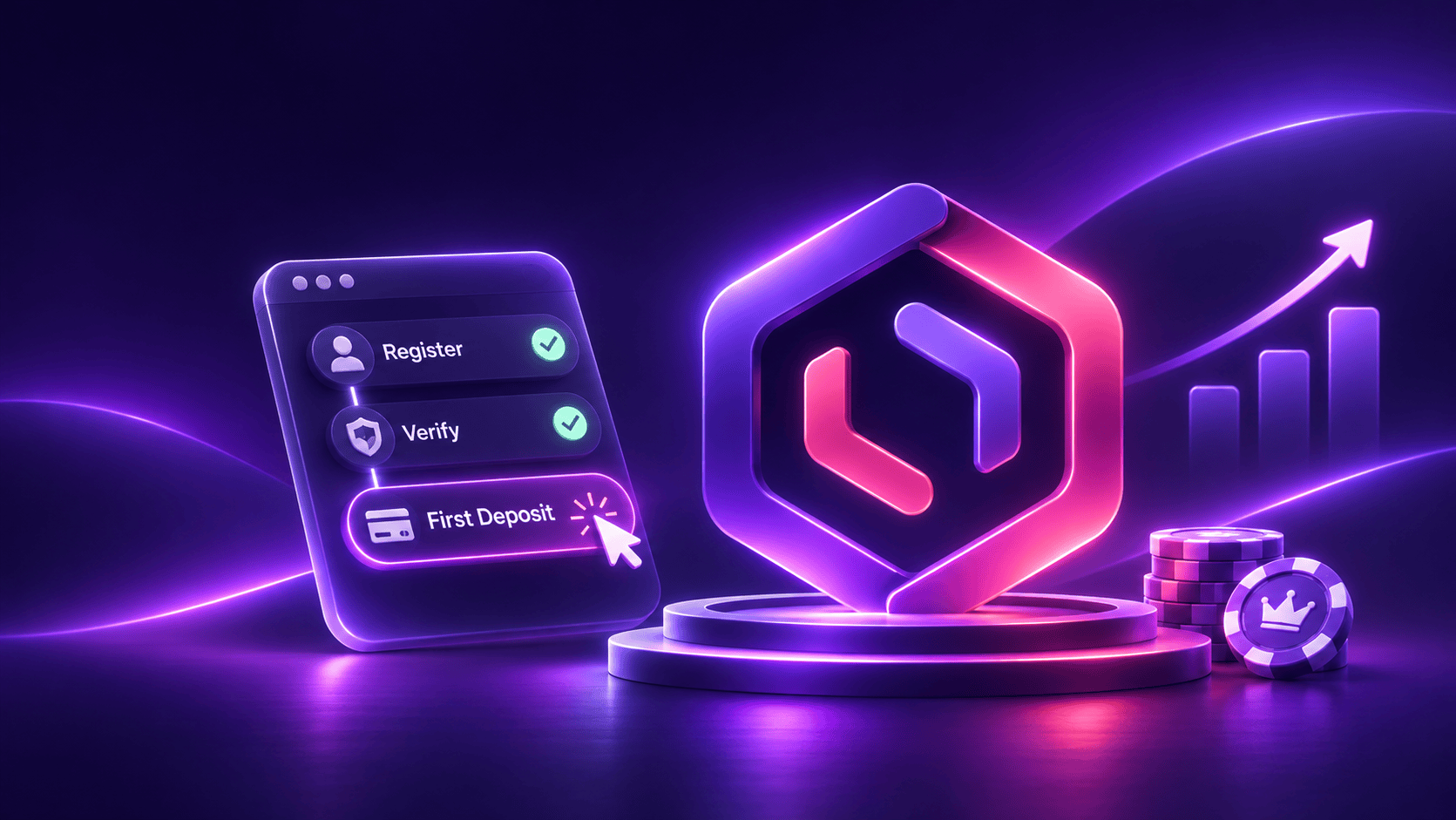
Visitor Arrives → Relevant Interactive Experience → Participation → Offer or Outcome Revealed → Registration → Verification → Player Activation
The important distinction is that the interaction should support the acquisition journey rather than become a disconnected marketing activity.
A spin wheel that generates thousands of interactions but produces no improvement in qualified registrations has limited acquisition value.
The objective is not simply to make a landing page more entertaining.
It is to create a clearer, more engaging path toward a measurable business outcome.
Why Traditional iGaming Landing Pages Lose Potential Players
Most casino and sportsbook acquisition campaigns follow a familiar structure.
A visitor clicks an advertisement or affiliate link and arrives on a page containing promotional messaging, available offers, featured games, and a registration CTA.
This approach can work.
However, several common problems can reduce its effectiveness.
1. Every visitor sees the same experience
Someone arriving from an affiliate comparison website may have different expectations from someone clicking a sportsbook promotion during a major tournament.
Showing both visitors an identical promotion ignores the context behind their visit.
2. Promotional messaging competes for attention
Casino landing pages frequently contain multiple banners, bonus offers, game categories, and competing CTAs.
Instead of making the next action obvious, these elements can make the experience harder to navigate.
3. There is little reason to interact before registering
A visitor might be interested in the brand but not ready to create an account.
Without a relevant interaction or clear explanation of the value proposition, that visit may end without producing a meaningful engagement signal.
4. Operators rely too heavily on financial incentives
Increasing welcome bonuses can attract attention, but it does not automatically address confusing registration journeys, unclear promotional terms, or poor mobile usability.
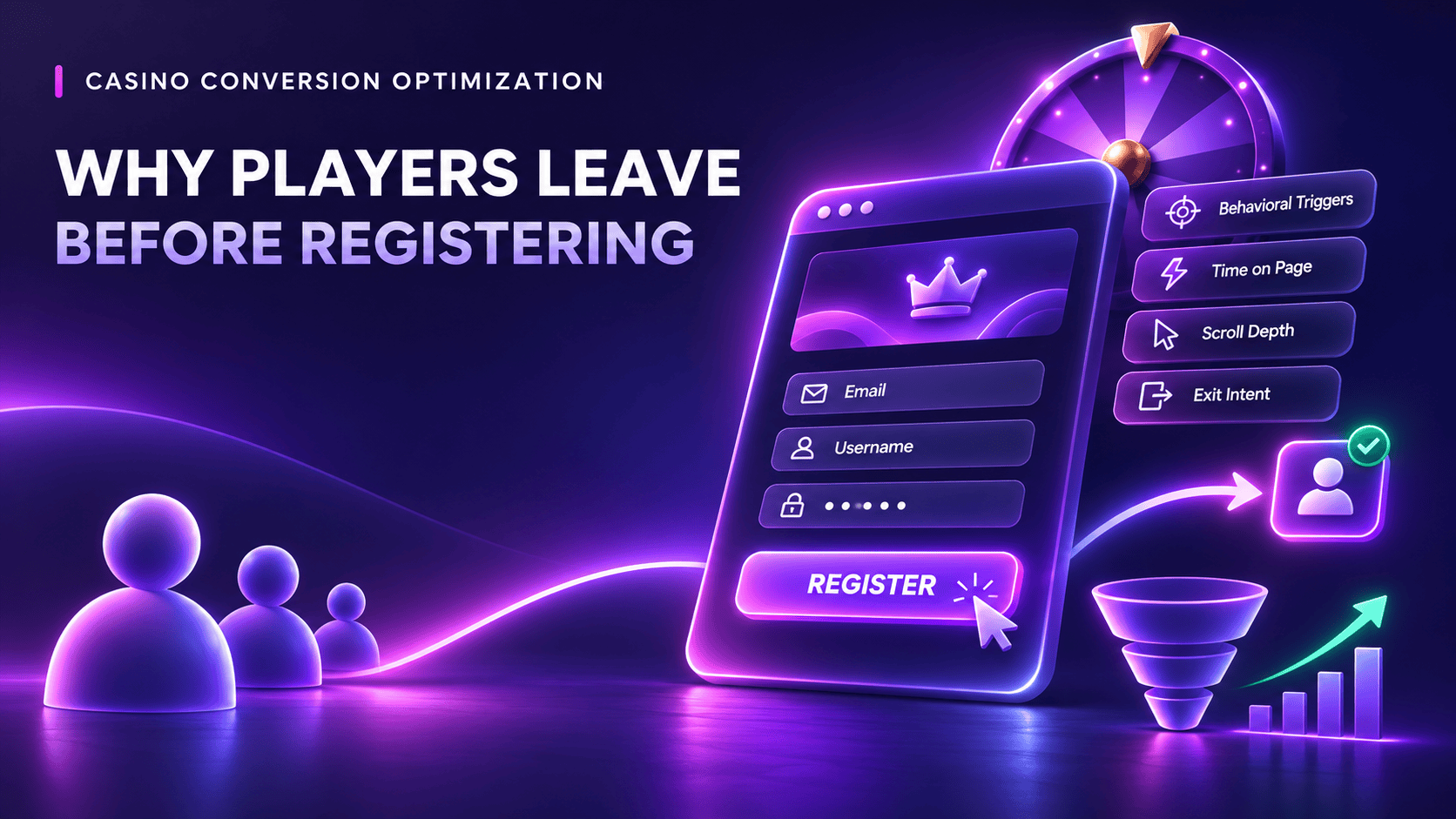
These challenges are explored further in Promofy’s guide to casino conversion rate optimization and the reasons players leave before registering.
Gamification offers a different opportunity.
Rather than relying exclusively on the size of the incentive, operators can experiment with how promotional value is presented, discovered, and understood.
Spin Wheels vs. Scratch Cards: Which Mechanics Work Best?
Spin wheels and scratch cards are two widely recognizable interactive formats.
Both can introduce a participatory element to acquisition campaigns, but they create different user experiences.
The better option depends on the campaign objective, audience, placement, and reward structure.
Spin Wheels: Creating a Visible Interactive Experience
A spin wheel presents an interactive selection of outcomes or rewards.
The visitor activates the wheel, sees it move through the available segments, and receives the configured outcome.
From a landing page design perspective, the mechanic has several potential advantages.
Visual clarity
Visitors can usually understand the interaction without detailed instructions.
Immediate feedback
The experience produces a visible result after participation.
Flexible campaign presentation
Operators can use branded segments, promotional themes, and clearly explained reward categories.
Simple integration into acquisition journeys
An appropriately targeted wheel can connect an initial interaction with the next eligible action, such as reviewing an offer or beginning registration.
For example, an online casino might test a spin wheel associated with an existing welcome campaign.
Rather than simply displaying a static welcome-offer banner, the operator could present an interactive explanation of the available promotional benefits.
Any reward eligibility, probability-related claims, material conditions, and redemption requirements should be communicated transparently.
The wheel should not imply that a reward is guaranteed or randomly awarded unless the actual mechanics support that claim.
Scratch Cards: Making Promotional Discovery Interactive
Digital scratch cards introduce a different interaction.
Visitors reveal concealed content by swiping or interacting with a designated area.
This format can fit naturally into mobile-first campaigns because the interaction is familiar and can be relatively compact.
Potential applications include:
- Revealing an eligible welcome promotion.
- Presenting a seasonal campaign reward.
- Introducing a branded promotional code.
- Supporting a short, optional engagement experience before registration.
The main benefit is not necessarily the reward value.
It is the interaction involved in discovering the outcome.
However, scratch cards should avoid misleading visitors into believing that an outcome is uncertain when it is predetermined, or that a reward is available without conditions when restrictions apply.
Spin Wheel vs. Scratch Card Comparison
| Factor | Spin Wheel | Scratch Card |
|---|---|---|
| Interaction | Spin and reveal | Scratch and reveal |
| Visual presentation | More prominent | More compact |
| Mobile experience | Requires responsive design | Naturally suited to touch gestures |
| Campaign use | Welcome offers, promotional discovery | Reward reveals, seasonal campaigns |
| Design consideration | Avoid excessive visual complexity | Keep the reveal clear and accessible |
| Primary testing opportunity | Interaction and registration progression | Reveal completion and registration progression |
Neither mechanic should be assumed to outperform the other.
Operators should test both against the same conversion objective, with comparable eligibility rules and promotional costs.
How to Design a Gamified iGaming Landing Page That Converts
Adding a mini-game does not automatically create a successful landing page.
The interaction must fit into a well-designed acquisition journey.
A practical approach is to build around five components.
1. Match the Experience to the Acquisition Source
Begin by identifying why the visitor arrived.
An affiliate visitor researching casino welcome offers may benefit from clear promotional information.
A sportsbook visitor arriving through a matchday campaign may be more interested in the relevant sporting event.
A visitor exploring a specific game category may need product information rather than another generic offer.
Different acquisition contexts may justify different landing page experiences.
The first question should be:
What does this visitor need to understand or accomplish next?
The gamified mechanic should support that objective.
2. Keep the Landing Page Focused
A common mistake is combining too many promotional elements.
A landing page containing multiple spin wheels, scratch cards, banners, countdown timers, and competing CTAs can create unnecessary complexity.
A more effective design often contains:
- One clear headline.
- A concise explanation of the campaign.
- One primary interactive experience.
- Visible eligibility information and significant terms.
- One logical next-step CTA.
- An accessible route to support and responsible-gambling information.
The purpose is to reduce confusion, not introduce another layer of promotional noise.
3. Make the Interaction Mobile-Friendly
Mobile usability is essential for modern acquisition campaigns.
A mechanic that looks impressive on desktop may create friction if visitors struggle to interact with it on smaller screens.
Operators should check that:
- Interactive elements remain usable on mobile devices.
- Buttons and touch targets are easy to activate.
- Text is legible without zooming.
- Popups do not obstruct essential information.
- The interaction does not unexpectedly interrupt registration.
- Pages remain responsive and visually stable.
Performance also matters.
Google’s Core Web Vitals guidance emphasizes loading performance, interaction responsiveness, and visual stability.
Interactive acquisition experiences should be assessed against these principles rather than optimized exclusively for visual impact.
4. Make Rewards and Next Steps Understandable
The visitor should understand what happens before and after interacting.
For example:
Discover an Eligible Offer → View the Outcome → Review the Conditions → Choose Whether to Register
The landing page should not create confusion about whether the visitor has actually won something, whether registration is required, or what additional conditions apply.
Clear messaging supports both user experience and responsible promotional practices.
5. Connect the Experience to the Broader Player Journey
Registration should not represent the end of the acquisition strategy.
After a visitor creates an account, the operator still needs to support identity verification, relevant onboarding, and the first-deposit journey where appropriate.
As explored in How to Improve First-Time Depositor Conversion Without Increasing Bonus Spend, successful activation depends on more than the promotional offer itself.
Gamification should complement a clear registration and onboarding process, not compensate for problems in those processes.
Behavioral Triggers: Showing the Experience at the Right Moment
One of the limitations of static landing pages is that every visitor receives the same information at the same time.
Behavioral targeting introduces a more contextual approach.
Instead of showing an interactive promotion immediately to every visitor, operators can configure when and where the experience appears.
Potential triggers include:
Exit intent
Present an optional experience when a visitor signals that they may leave the page, provided the interaction is appropriate and does not interfere with user choice.
Time on page
Display an experience after a visitor has spent a defined period exploring relevant content.
Scroll depth
Introduce an interaction after a visitor has reached a particular section.
Button interactions
Connect an experience to an intentional click on a campaign element.
Page visits
Display different experiences on relevant landing pages or promotional sections.
These triggers can make campaigns more contextually relevant.
However, behavioral targeting should not be interpreted as a reason to pressure every hesitant visitor.
For example, an operator should not deploy additional promotional pressure when a user has expressed a wish to stop gambling, activated an exclusion, or demonstrated indicators requiring protective intervention.
The goal is to make the experience more relevant while respecting visitor choice and player-protection requirements.
This is also where dedicated acquisition technology can reduce the operational effort required to configure and manage interactive campaigns.
How to A/B Test Gamified Landing Pages in iGaming
A gamified landing page may produce more clicks and interactions than a static page.
But more interaction does not necessarily mean more conversion.
Operators need controlled testing to determine whether the mechanic creates measurable incremental value.
Step 1: Define the Conversion Objective
Before launching a test, identify the primary outcome.
Possible objectives include:
- Qualified registration completion.
- Registration-to-verification progression.
- Verified first-time deposit conversion.
- Cost per qualified acquired customer.
- Net acquisition value after promotional costs.
For an acquisition landing page, qualified registration rate may be an appropriate primary KPI.
However, the operator should also monitor downstream outcomes to ensure that additional registrations translate into meaningful, compliant customer acquisition.
Step 2: Create a Clear Hypothesis
A useful test should answer a specific question.
For example:
Does introducing a spin-wheel experience on an eligible acquisition landing page increase qualified registrations compared with the existing static promotional presentation?
That hypothesis is more useful than simply asking whether visitors enjoy gamification.
It identifies the change and the outcome to be measured.
Step 3: Compare a Control With a Gamified Variant
A basic experiment could include:
| Test element | Variant A: Control | Variant B: Gamified |
|---|---|---|
| Landing page | Standard promotional page | Same page with spin wheel |
| Promotional value | Existing offer | Equivalent offer |
| Registration CTA | Standard CTA | CTA following the interaction |
| Main KPI | Qualified registration rate | Qualified registration rate |
| Secondary KPIs | FTD rate, acquisition cost | FTD rate, acquisition cost |
Visitors should be randomly assigned to a variant and remain in that variant throughout the experiment.
The same eligibility rules, traffic mix, promotional budget framework, and measurement definitions should apply to both groups.
Without these controls, it becomes difficult to distinguish the effect of gamification from other changes.
Step 4: Track the Complete Conversion Funnel
Interaction events provide useful diagnostic information, but they should not be treated as the final commercial outcome.
A typical measurement journey might include:
Landing Page Viewed → Gamification Displayed → Interaction Started → Interaction Completed → Registration Started → Registration Completed → Verification Completed → First Deposit Completed
Operators can measure each stage to identify where performance changes.
For example, a spin wheel might significantly increase interaction without increasing completed registrations.
Alternatively, it might increase registration starts while also increasing abandonment during signup.
Both outcomes provide useful information.
The important point is to measure what happens after the interaction.
Step 5: Evaluate Conversion Lift and Incremental Value
The basic landing page registration conversion formula is:
Registration Conversion Rate = (Qualified Registrations ÷ Eligible Landing Page Visitors) × 100
For example, imagine a campaign produces the following results:
- Control: 10,000 visitors and 600 qualified registrations.
- Gamified variant: 10,000 visitors and 720 qualified registrations.
The control conversion rate is 6%.
The gamified conversion rate is 7.2%.
That represents a 20% relative increase in registration conversion, or 1.2 percentage points.
This is a hypothetical illustration, not a Promofy performance result or industry benchmark.
A proper experiment must also evaluate statistical uncertainty, sample size, attribution quality, traffic consistency, promotional costs, and downstream customer outcomes before declaring a winner.
The operator should also check whether the additional registrations translate into qualified FTDs rather than merely increasing the number of accounts created.
Step 6: Maintain a Continuous Testing Framework
Once a valid result has been established, operators can investigate additional questions.
For example:
- Does a spin wheel outperform a scratch card for the same audience?
- Does a page-visit trigger perform differently from a time-on-page trigger?
- Does a smaller, less intrusive interactive component work better on mobile?
- Does clearer offer messaging improve conversion without increasing reward value?
- Are outcomes consistent across affiliate sources and markets?
Each experiment should isolate a meaningful change wherever practical.
Google provides guidance on integrating A/B testing tools with Google Analytics, allowing experiment results to be analyzed alongside relevant website events.
The objective is to create an acquisition optimization process based on evidence rather than assumptions.
Which Metrics Should Operators Track?
Gamification performance should be evaluated across three layers: interaction, conversion, and commercial value.
| Metric | Why it matters |
|---|---|
| Eligible landing page visitors | Establishes the experiment denominator |
| Gamification display rate | Measures actual exposure |
| Interaction start rate | Shows initial participation |
| Interaction completion rate | Identifies usability or experience friction |
| Registration start rate | Indicates progression toward signup |
| Qualified registration rate | Measures the primary acquisition outcome |
| Registration-to-FTD rate | Connects signup to verified activation |
| Cost per qualified registration | Evaluates acquisition efficiency |
| Promotional cost per FTD | Helps assess reward economics |
| Downstream retention | Indicates whether acquired players remain meaningfully engaged |
Operators should also track negative indicators, such as intrusive popup complaints, promotional confusion, unexpected abandonment, and responsible-gambling concerns.
A successful acquisition campaign should not be defined solely by the largest number of interactions.
It should be evaluated by whether it produces incremental value without compromising usability, regulatory obligations, or player protection.
Responsible Gamification: Conversion Without Unnecessary Pressure
Gamified promotions in iGaming require additional care because they operate within a regulated environment.
Operators must consider the rules governing gambling advertising, promotional incentives, player eligibility, and responsible-gambling practices in each target jurisdiction.
For example, the UK Gambling Commission’s guidance on open and transparent marketing requires significant promotional conditions to be presented clearly and prominently in relevant marketing materials and landing pages.
The Advertising Standards Authority’s guidance on gambling bonuses also addresses misleading promotional claims, eligibility restrictions, and responsible advertising.
For gamified landing pages, practical safeguards should include:
- Clear minimum-age and jurisdiction eligibility controls.
- Transparent promotional conditions and reward limitations.
- Accurate presentation of prize outcomes and probabilities where relevant.
- Appropriate consent and privacy controls.
- Suppression of promotional experiences for self-excluded or otherwise restricted users.
- Avoidance of mechanics that encourage harmful or repetitive gambling.
- Accessible responsible-gambling information.
An interactive experience should not exploit a user’s hesitation, vulnerability, or difficulty controlling gambling behavior.
Responsible design is not separate from landing page optimization.
It is part of building sustainable, trustworthy acquisition experiences.
Where Promofy Spark Fits Into Gamified Landing Page Optimization
Building an interactive acquisition strategy requires more than selecting a promotional mechanic.
Operators also need ways to control where the experience appears, which visitor behavior triggers it, and how the resulting actions connect to registration and conversion.
This is where Promofy Spark fits into the acquisition journey.
Spark is an onsite acquisition solution designed to help operators turn anonymous website traffic into interactive engagement and measurable conversion opportunities.
Instead of requiring every promotional interaction to be built separately into an operator’s website, Spark provides configurable onsite experiences that can be deployed around existing pages and acquisition campaigns.
Interactive Acquisition Mechanics
Spark supports experiences including:
- Spin wheels.
- Scratch cards.
- Mystery boxes.
- Promotional banners.
These mechanics can be incorporated into a broader landing page strategy without requiring the operator to rebuild its core casino or sportsbook platform.
Behavior-Triggered Experiences
Operators can configure interactions using website signals such as exit intent, scroll depth, time on page, button clicks, and page visits.
This creates opportunities to connect the experience with the visitor’s actual browsing context instead of showing the same generic promotion to everyone.
Campaign Control Without Constant Development Dependencies
Spark provides a centralized environment for configuring campaign placement, widgets, triggers, promotional messaging, design, and relevant calls to action.
This allows growth and marketing teams to manage onsite acquisition experiences with less reliance on repeated development work.
Connecting Acquisition to Measurable Outcomes
Spark is designed around tracking campaign engagement and downstream acquisition actions, including registrations and first-time deposits where the required integration and data are available.
That distinction matters.
The commercial value of an interactive campaign should be judged by its contribution to the acquisition funnel, not solely by how many visitors spin a wheel or reveal a scratch card.
Promofy’s broader Gamification Suite can then support engagement and progression experiences after acquisition, helping operators connect different stages of the player lifecycle.
The product roles are complementary:
Spark → Anonymous Traffic & Acquisition
Gamification Suite → Player Engagement, Progression & Loyalty
The aim is to connect individual interactions with a longer-term engagement strategy rather than treating every promotional campaign as a standalone activity.
For a broader view of that approach, explore iGaming Gamification Strategy: Engagement, Retention & Loyalty.
Five Common Mistakes to Avoid
Even visually engaging campaigns can underperform if the acquisition journey is poorly designed.
1. Treating interactions as conversions
A high spin-wheel participation rate does not prove that qualified player acquisition has improved.
Always connect engagement data to downstream results.
2. Introducing too many mechanics
Multiple interactive widgets can compete for attention and create friction.
Prioritize one relevant experience with a clear purpose.
3. Ignoring the quality of acquired users
More registrations do not automatically mean better acquisition efficiency.
Monitor verification, FTD conversion, promotional cost, and appropriate downstream outcomes.
4. Failing to test the original landing page
Without a control group, operators cannot confidently attribute performance changes to the gamified experience.
5. Using gamification to hide a weak user journey
A spin wheel cannot fix a confusing registration form, poor mobile usability, unclear promotional terms, or payment-processing issues.
Those problems require improvements to the underlying experience.
Gamification should enhance a functioning acquisition journey rather than distract from its weaknesses.
Frequently Asked Questions About Gamified iGaming Landing Pages
What is a gamified landing page in iGaming?
A gamified iGaming landing page is a casino or sportsbook campaign page that uses interactive experiences such as spin wheels, scratch cards, or mystery boxes to support engagement and relevant acquisition actions.
Do spin wheels improve casino registration rates?
Spin wheels may help improve participation and registration progression when they are relevant, clear, and well-integrated into the landing page. However, their actual conversion impact must be measured through controlled testing rather than assumed.
Are scratch cards effective for mobile casino campaigns?
Scratch cards can be a useful format for mobile-first experiences because they rely on a familiar touch interaction. Their effectiveness depends on usability, campaign relevance, transparency, and the quality of the overall registration journey.
How should operators measure gamified landing page performance?
Operators should track interaction starts and completions alongside qualified registrations, verification progression, first-time deposit conversion, acquisition costs, and relevant player-protection indicators.
Can gamified landing pages work without increasing bonus budgets?
Yes. Operators can experiment with the presentation and discovery of existing promotional value, as well as non-monetary interactive experiences. Additional bonuses are not always required. Commercial improvement must still be validated through testing.
What is the difference between Promofy Spark and a gamification platform?
Promofy Spark focuses on converting anonymous website traffic through behavior-triggered onsite experiences. The broader Promofy Gamification Suite supports configurable player engagement, progression, missions, rewards, and loyalty experiences throughout the customer lifecycle.
Final Thoughts: Turn Traffic Into Meaningful Interaction
The challenge of iGaming acquisition is not simply attracting more visitors.
It is making better use of the traffic operators already acquire.
Static landing pages, welcome banners, and traditional promotional offers will continue to play an important role.
But interactive experiences introduce additional ways to engage visitors, communicate campaign value, and guide interested users toward registration.
Spin wheels and scratch cards can be useful parts of that strategy.
Their value, however, depends on the complete acquisition journey.
Relevant Traffic → Appropriate Interaction → Clear Next Step → Qualified Registration → Player Activation
For operators, the opportunity is to combine engaging experiences with controlled experimentation, transparent promotional practices, and meaningful conversion measurement.
The strongest gamified landing page is not necessarily the one with the most impressive animation or the largest reward.
It is the one that delivers a clearer experience and demonstrates incremental commercial value.
Turn Your Acquisition Traffic Into Action With Promofy Spark
Discover how Promofy Spark helps casino and sportsbook operators introduce interactive, behavior-triggered acquisition experiences using spin wheels, scratch cards, mystery boxes, and configurable onsite campaigns.
Explore how interactive promotions can complement your existing website and support measurable player acquisition.